
By Foster Akpore
OZORO—Southern Delta University (SDU), Ozoro, has expressed its readiness to partner with the Male Feminist Network (MFN) South-South Nigeria in promoting gender equality, positive masculinity, and the prevention of Sexual and Gender-Based Violence (SGBV) within and beyond the university community.
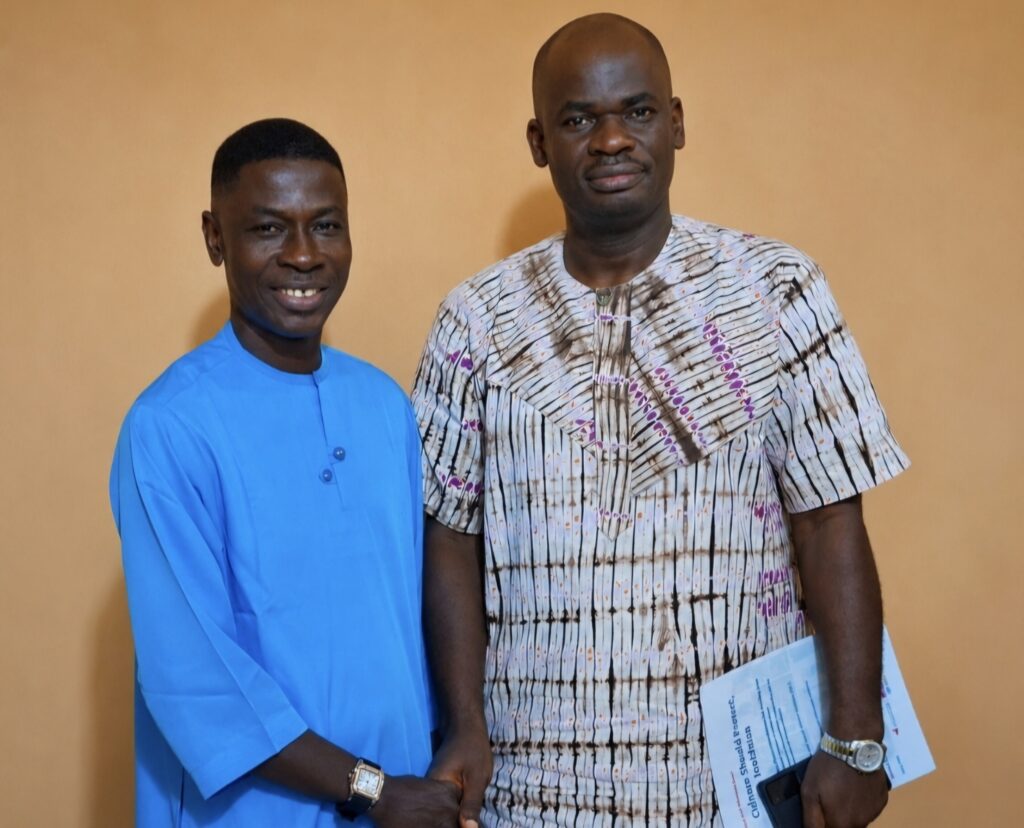
The commitment was made on Wednesday, July 15, during a courtesy visit by the Executive Director of the Value Rebirth and Empowerment Initiative (VREI), Pastor Edewor Egedegbe, to the Vice Chancellor of the university, Prof. Sunny Awhefeada, as well as the Principal Officers and distinguished members of the University’s Management.
Egedegbe, who led the delegation, said the visit was aimed at seeking a strategic partnership with the institution on initiatives that would advance gender justice, responsible leadership, and inclusive development.
Presenting the proposal, he explained that the Male Feminist Network is a movement dedicated to mobilizing men and boys as advocates for gender equality and the elimination of violence against women and girls.
According to him, the network deploys advocacy, mentorship, awareness campaigns, capacity-building programmes, and community engagement to challenge harmful gender stereotypes and promote healthy relationships.
He noted that partnering with Southern Delta University would provide an opportunity to educate students on responsible leadership, respect for human dignity, peaceful coexistence, and gender-responsive values.
Egedegbe proposed areas of collaboration to include campus-wide sensitization on gender equality and positive masculinity, awareness programmes on Sexual and Gender-Based Violence, leadership and mentorship initiatives, the establishment of a Male Feminist Network campus chapter, public lectures, seminars and workshops, as well as joint research and policy advocacy on gender and social development.
He added that the partnership would strengthen the university’s commitment to the Sustainable Development Goals (SDGs), particularly Goal 5 on Gender Equality and Goal 16 on Peace, Justice and Strong Institutions.
Responding, the Director of Gender Studies at Southern Delta University, Dr. Ese Jeroh, welcomed the initiative and underscored the need for structured collaboration between the institution and organizations working to advance gender inclusion and social development.
Jeroh encouraged the delegation to develop clear terms of partnership that would facilitate effective engagement with students and relevant departments of the university.
Speaking at the close of the meeting, the Vice Chancellor, Prof. Sunny Awhefeada, described the growing attention to gender issues on campus as significant, noting that the university had hosted three separate groups focused on gender and girl-child advocacy within the last two months.
Awhefeada said, “The world has become very dynamic, much more dynamic than it was even five years ago, to the extent that we cannot make progress without mainstreaming gender.”
He observed that discussions around male feminism and positive masculinity had become increasingly relevant in a society historically shaped by patriarchal norms.
“Male dominance has always been the order of the day—in our daily lives, in our writings, and in almost everything we do. But that hasn’t taken us anywhere, and that is why the world is evolving,” he said.
The Vice Chancellor assured the delegation that Southern Delta University would align with global conversations on gender inclusion, adding that the institution was prepared to integrate gender advocacy initiatives into its orientation programmes for newly admitted students.
According to Awhefeada, exposing students to concepts such as inclusiveness, positive masculinity, and mutual respect at the point of entry into the university system would help cultivate responsible citizens and foster institutional balance.
He emphasized that societal progress depends on harnessing the potentials of both men and women.
“The girl child is here, and the girl child is now standing shoulder to shoulder with the boy child. Therefore, for us to make progress, we must harness the potentials of both,” he stated.
Awhefeada further called for a re-examination of cultural practices that undermine women and girls, stressing that the well-being of society is intrinsically linked to the protection and empowerment of women.
“When the girl child or woman is endangered, society itself is endangered,” he added.
He assured the visiting delegation that Southern Delta University remained open to partnerships that promote human development and social transformation.
“When the story is told someday about how society was remade, about how humanity was renewed and reimagined, this university will be mentioned—that at such and such a time, the call was made, and Southern Delta University answered the call,” Awhefeada said.
The meeting ended with both parties expressing optimism that a formal collaboration would pave the way for a safer, more inclusive, and gender-responsive academic environment while contributing to broader societal development.