
By Foster Akpore
For those who still wondered whether Orogun could find its way back to a shared centre, whether its traditions still possessed the strength to unite rather than divide, and whether the bonds among its people could be renewed, the events of Monday, December 29, 2025, offered a quiet but convincing answer.
On that day, Orogun Kingdom witnessed a moment whose meaning reached beyond ceremony. It was a public signal of hope and a clear indication that the long process of healing and reconciliation within the kingdom had begun. Under the authority of His Royal Majesty Joseph Okorocha Emoghene Osuokpa I, the 39th Okpara-Uku of Orogun Kingdom, nine distinguished sons and daughters were conferred with chieftaincy titles.
The honourees were Prof. Emmanuel Ofudjaye Ndakara, installed as Urhukperisi of Orogun Kingdom; Barr. Dennis Ojarikre Warri, Ugherughe of Orogun Kingdom; Dr. (Mrs.) Joy Elohor Ndakara, Obruche of Orogun Kingdom; Mrs. Eguono Dennis-Warri, Ayesiri of Orogun Kingdom; Mr. Moses Ejoh Ejakpovi, Abadi-Rode of Orogun Kingdom; Ambassador Frank Avwerosuoghene Ossai, Akpesiri of Orogun Kingdom; Mrs. Emoghene Elizabeth, Ejemoyovwi of Orogun Kingdom; Mrs. Esther Odjegba, Ovieregheri of Orogun Kingdom; and Mrs. Patience Ejakpovi Ejoh, Ivieovie of Orogun Kingdom.
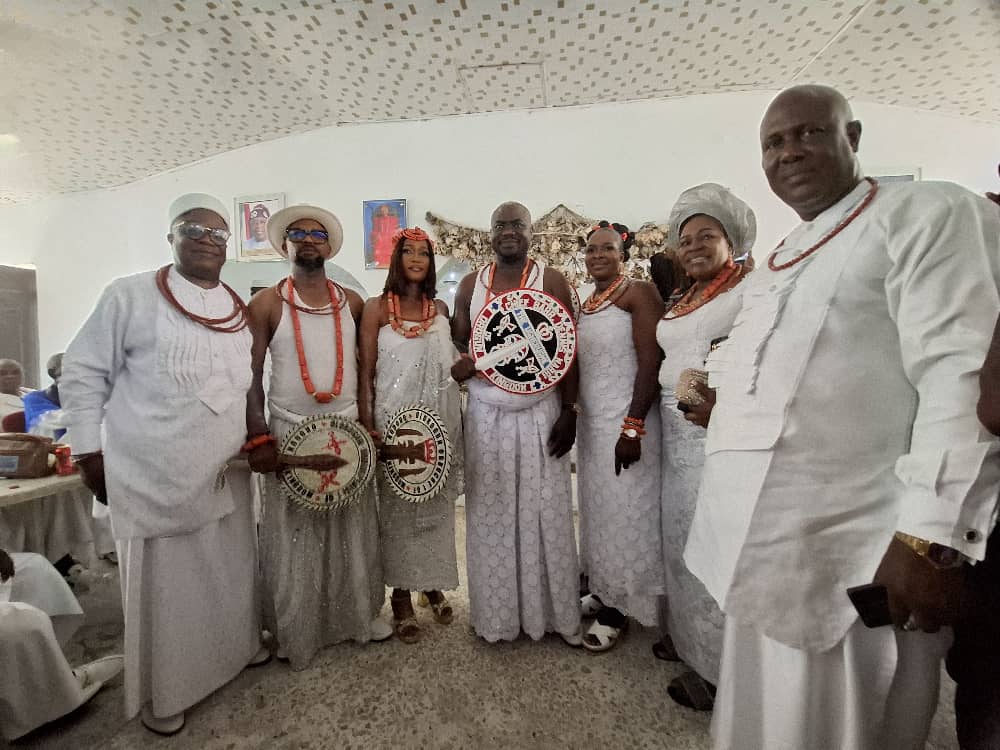
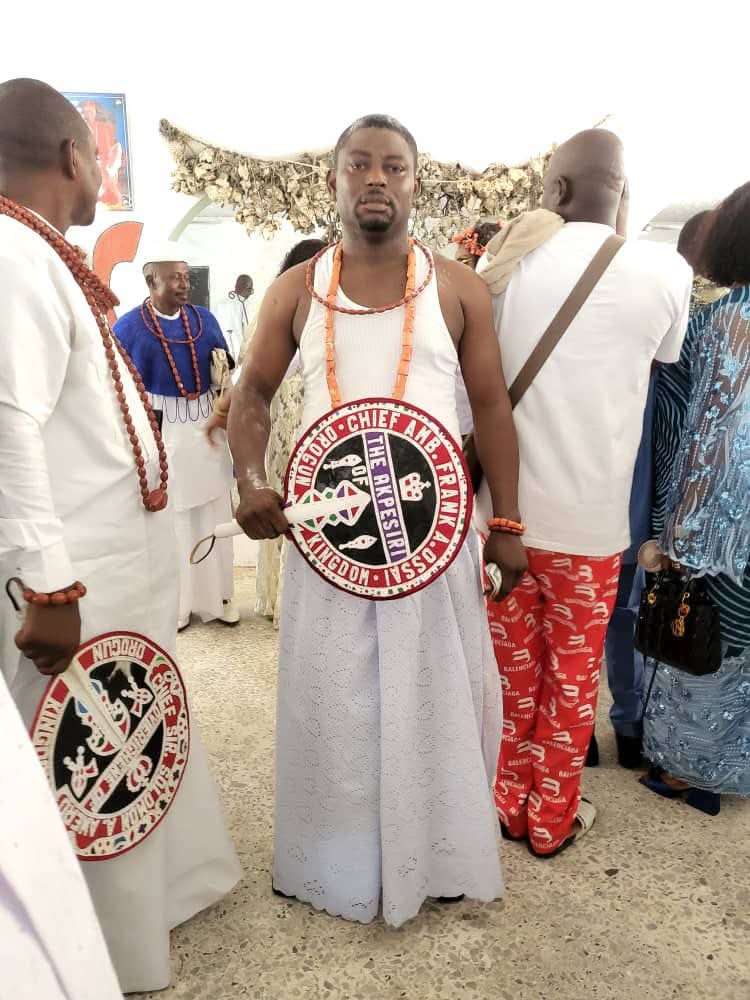
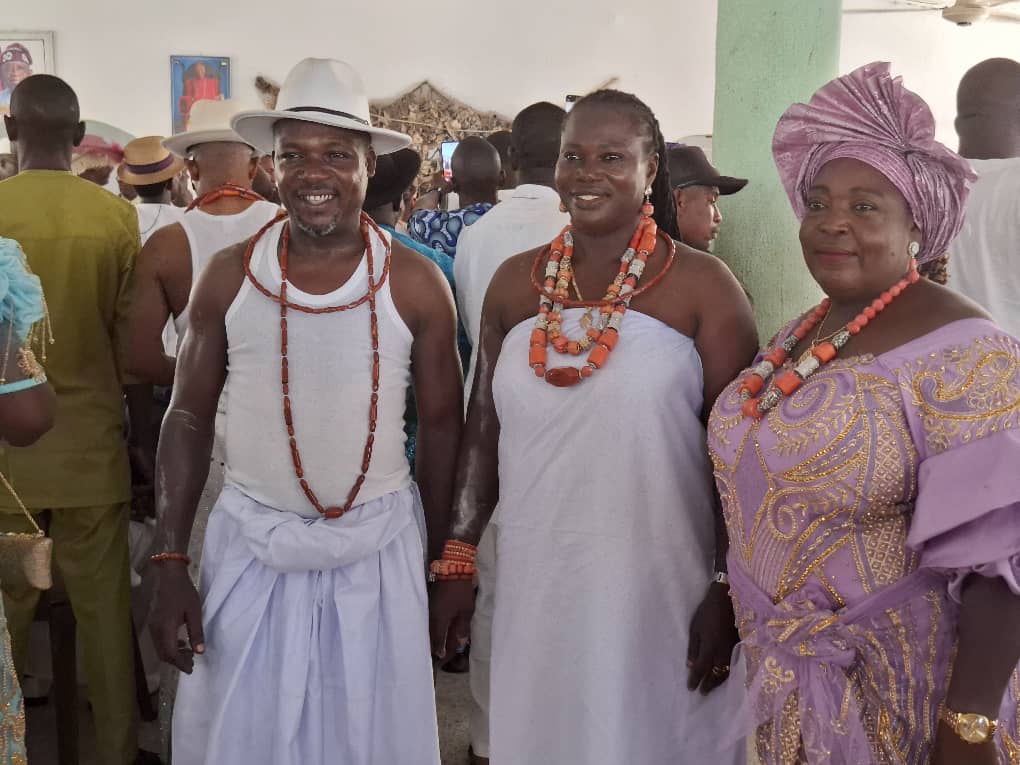
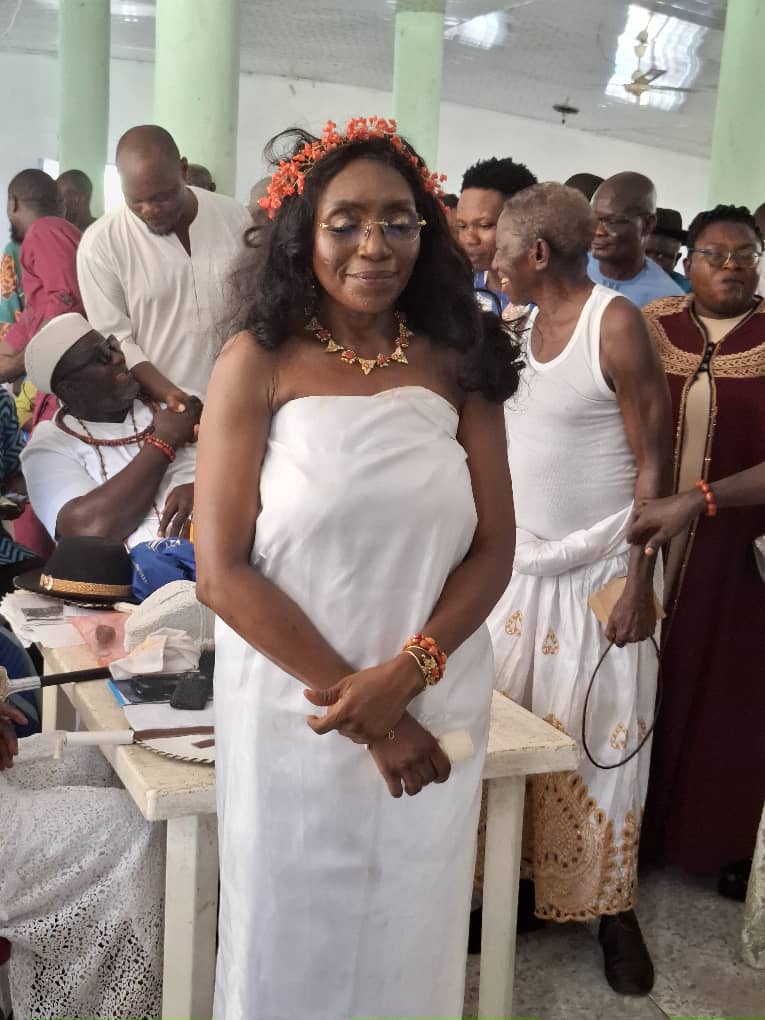
These titles were not presented as ornaments of prestige. They were framed, both in tone and substance, as calls to service and symbols of shared responsibility at a time when the kingdom needed reassurance of its cohesion.
For about a year, Orogun Kingdom, like many traditional communities navigating modern pressures, faced internal strains. Disputes over authority, breakaway tendencies, parallel festivals, court actions, and tension within the traditional council tested the resilience of the kingdom’s institutions. Quiet questions circulated within and beyond the community about whether Orogun’s collective spirit, often expressed as ‘Orogun orua iyorin” or “Orogun ebise”, still endured. The ceremony offered a measured but firm response.
Representatives from all five sub-clans—Umusu, Unukpo, Emonu, Imodje, and Ogwa—were present together in the palace courtyard. Chief Felix Ochuko Edevbie, reflecting on the significance of the occasion, praised the Okpara-Uku and the President General for their commitment to peace in the kingdom and noted that “over forty members of the Orogun Traditional Council of Chiefs attended.”
Their collective presence was neither routine nor accidental. It marked the first time in about a year that almost the full breadth of Orogun’s traditional leadership gathered in one place with a shared purpose. In practical terms, it signified that dialogue had resumed. In symbolic terms, it affirmed that the kingdom remains one.
Attendance by key figures added further weight to the moment. The presence of Chief Barr Benson Onoharigho Ndakara, the immediate past President General, alongside his amiable wife, was widely noted. His warm reception by the Okpara-Uku, the Orogun Traditional Council of Chiefs, and all in attendance, as well as the reciprocal visit by Chief Dominic Emoghene, the Omo Okpara-Uku, to his Aragba country home, reflected continuity of respect and the recognition that leadership influence often outlives formal office.
Equally important was the steady role played by Chief E. T. Opone, the current President General, whose calm stewardship helped preserve the dignity and order of the event.
Since ascending the throne, HRM Joseph Okorocha Emoghene Osuokpa I has consistently emphasized peace, restraint, and collective responsibility. The conferment of these chieftaincy titles aligned with that vision. It reinforced the understanding that chieftaincy in Orogun is a moral trust, grounded in service to the people and loyalty to shared tradition. By selecting individuals drawn from all sub-clans and backgrounds, the monarch underscored inclusiveness and balance as guiding principles.
Beyond the formal rites, the ceremony carried a deeper message. It suggested that reconciliation does not begin with declarations alone, but with deliberate actions that rebuild confidence and restore shared spaces. The gathering of elders, chiefs, and community representatives showed that, while divisions have not vanished overnight, the willingness to heal is present.
In the words of Chief (Barr) Dennis Warri, speaking on behalf of the conferees: “We call on those still aggrieved to sheathe their swords and join the unity train.”
In that sense, the chieftaincy conferment on the ‘Class of December 2025’ marked a beginning. It offered reassurance that Orogun Kingdom is moving away from fragmentation toward careful repair. It reminded the people that tradition can be a stabilising force when guided by wisdom, and that unity is often restored not through confrontation, but through patient, inclusive leadership.
On that day, Orogun Kingdom stood not as a collection of disputed positions or competing interests, but as a community choosing renewal. The message was clear: hope has returned to the centre of the kingdom, and the journey toward full reconciliation, though still unfolding, has truly begun.
Happy New Year
(Foster Akpore is the Media & Public Relations Officer of Orogun Kingdom and Publisher of Oghwoghwa Reporters)