
By Foster Akpore
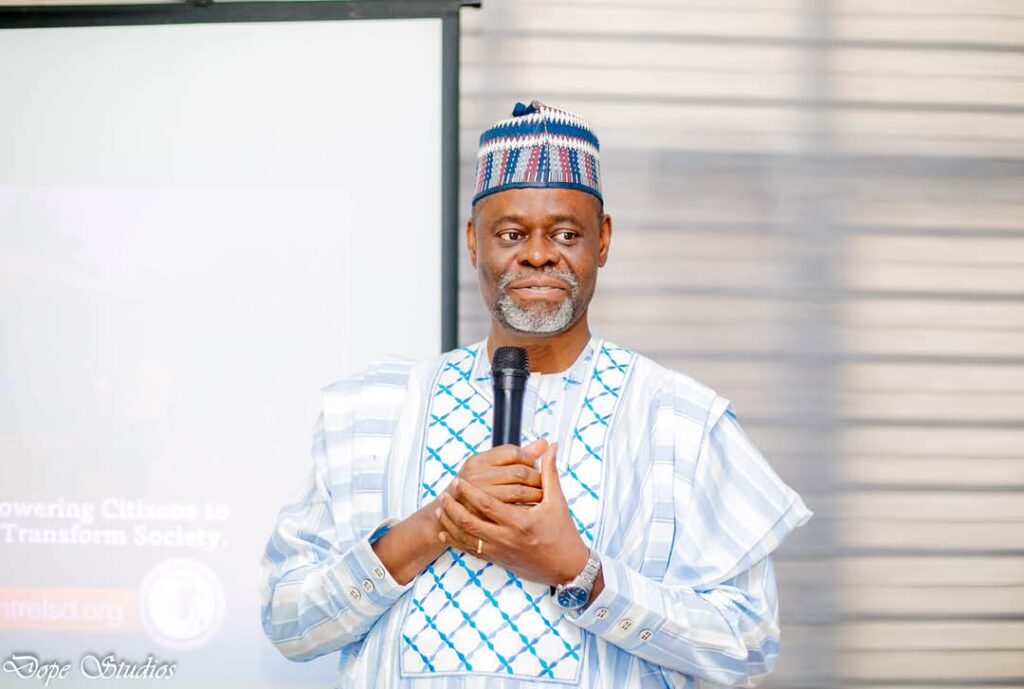
Dr. Otive Igbuzor, a leading Nigerian development expert and civil society advocate, has urged citizens to approach planning for 2026 with discernment, discipline, and moral clarity, warning that the crises that defined 2025 demand more thoughtful responses from individuals, nations and institutions alike.
Igbuzor, who is the founding Executive Director of the African Centre for Leadership, Strategy and Development and a former Country Director of ActionAid Nigeria, made the call while reflecting on the state of the world and Nigeria in 2025. He noted that the year marked the nineteenth consecutive decline in global freedom, accompanied by shrinking civic space, democratic backsliding, rising insecurity, deepening polarisation, and the growing misuse of digital technologies.
According to him, these global pressures have been compounded by rising military expenditure, slow economic growth, persistent inequality, worsening climate shocks, and an erosion of trust in institutions. He said the combined effect has produced a world that is increasingly fragmented, volatile, and insecure.
Turning to Nigeria, Igbuzor, said the country experienced many of these challenges in sharper relief. He pointed to persistent insecurity, renewed terrorist attacks, widespread kidnapping and mass abductions, and the humanitarian crises associated with them. He also highlighted high inflation, soaring food prices, mounting national debt, and economic reforms that have yet to translate into improved living standards for most citizens.
He added that early political manoeuvring ahead of the 2027 general elections has intensified political tension and crowded out serious policy conversations, while civic space continues to shrink and social cohesion weakens.
Despite these pressures, Igbuzor, who is also the General Overseer of Palace of Priests Assembly, acknowledged the resilience of Nigerians, but cautioned that endurance alone was no longer sufficient. Drawing from the Bible, he referenced the children of Issachar, whom scripture describes as people who “understood the times and knew what Israel ought to do,” describing them as a model for leadership and citizenship in periods of uncertainty.
“The challenge before us is not just to survive difficult times, but to understand them and respond wisely,” he said, stressing that planning without discernment risks deepening confusion.
He argued that preparation for 2026 should begin with reflection rather than frantic activity, anchored on values, informed counsel, and ethical grounding. Citing biblical principles, he emphasised the importance of committing plans to God and seeking advice, particularly in a volatile and polarised environment.
Igbuzor advised Nigerians to ground their plans in clearly defined mission, vision, and values, which he described as essential anchors amid political noise, economic stress, and digital misinformation. He warned that stability could not be assumed in 2026 and urged citizens to plan with the expectation of continued economic pressure, intense political competition, and expanding digital influence, with its attendant risks.
He also encouraged practical, personal planning, urging individuals to ask hard questions about their goals, skills, sources of information, networks, timeframes, and costs, especially in an inflationary economy. He stressed the growing importance of skills acquisition, lifelong learning, and credible relationships in a society where trust is increasingly scarce.
Referencing the biblical vision framework from Habakkuk, Igbuzor called for plans that are written down, kept simple, shared with trusted partners, pursued patiently, and sustained by faith. He said clarity of purpose and timing were critical in fragile contexts where progress may be slow.
He further urged balanced planning across key areas of life, including spiritual development, family, health, education, career, relationships, finances, and investment. He cautioned against speculative decisions, advocating instead for sustainability, prudence, and long-term thinking.
Igbuzor concluded that while institutions may be under strain and global conditions remain uncertain, individuals still possess agency. Planning for 2026, he said, should not be about predicting calm conditions, but about strengthening character, building capacity, and acting with informed resolve in the face of uncertainty.