
By Foster Akpore I August 6, 2026 | Orerokpe, Delta State
Southern Delta University, Ozoro, Orerokpe campus, on Thursday hosted the Prof. Sam Egite Oyovbaire Public Service Lecture, with leading political scientist and Director-General of the Nigerian Institute of International Affairs (NIIA), Prof. Eghosa Osaghae, arguing that Nigeria’s greatest challenge is not the absence of federalism but the absence of people and institutions committed to defending and practising it.
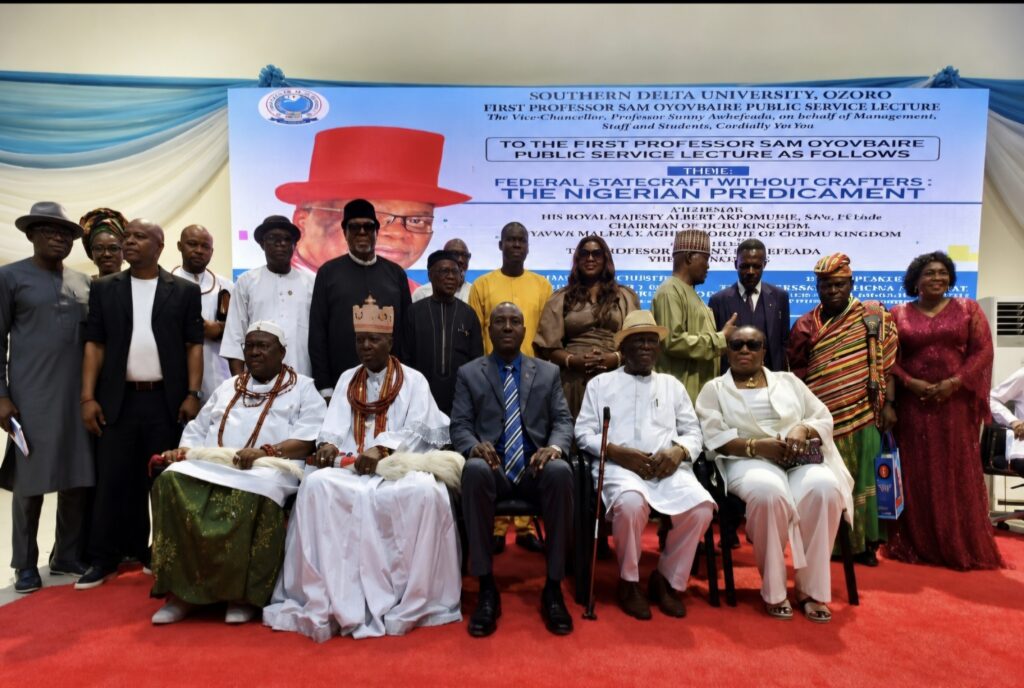
Delivering the guest lecture, titled “Federal Statecraft Without Crafters: The Nigerian Predicament,” Osaghae maintained that although federalism remains one of the country’s most debated political ideas, many Nigerians misunderstand its principles and practice.
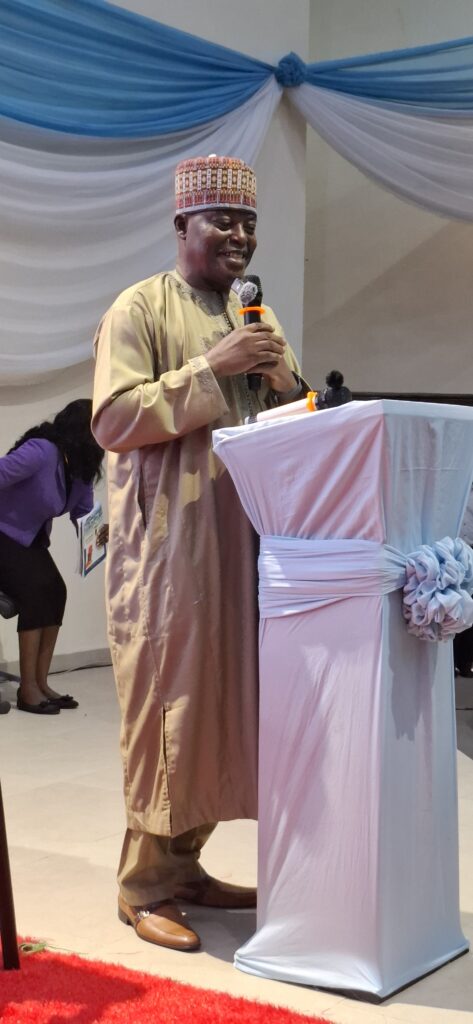
“Nigerians know so much about federalism, but they really don’t know anything,” he said. “Those who contribute to the debate do so from positions that expose all the things you would call ignorance. And yet, everyone is convinced and persuaded that what Nigeria needs more than anything else is federalism.”
He likened Nigeria’s understanding of federalism to “the worship of an unknown god,” arguing that the concept had become a popular slogan without the institutions, political culture and leadership required for its success.
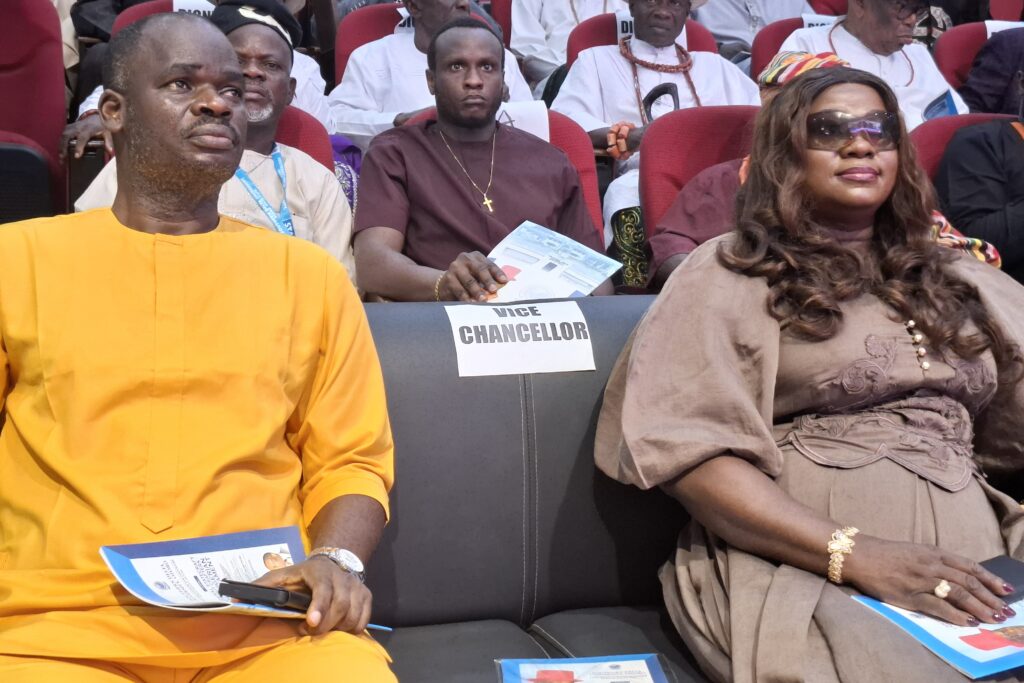
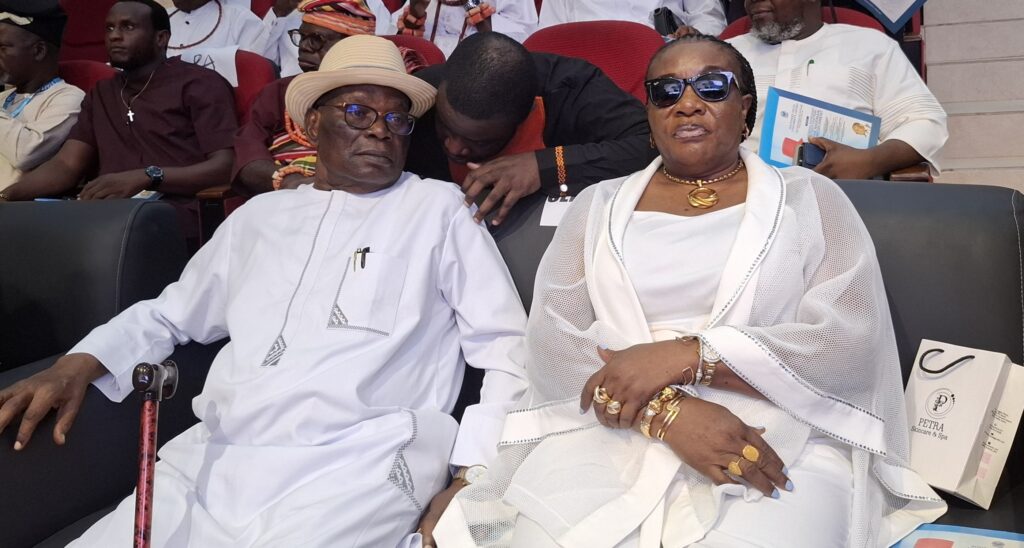
The event, held at the university’s Main Auditorium, Orerokpe Campus, attracted traditional rulers, government officials, academics, legal practitioners, students, and other distinguished guests. The Royal Father of the Day, HRM Major General Felix Mujakperuo (Rtd.), Orhue I, the Orodje of Okpe Kingdom and Chairman of the Delta State Traditional Rulers Council, graced the occasion, while the Ohworode of Olomu Kingdom, HRM Albert Akpomudje (SAN), CFR, served as Chairman of the event. Delta State Governor, Rt. Hon. Sheriff Oborevwori, was represented by the Commissioner for Higher Education, Professor Nyerhovwo Tonukari. The Vice-Chancellor of Southern Delta University, Professor Sunny Awhefeada, served as Chief Host, while the lecture honoured distinguished political scientist and former Minister of Information, Professor Sam Egite Oyovbaire.
Tracing the evolution of federal systems, Osaghae distinguished between what he described as aggregative and disaggregative federalism. While the former involves previously autonomous states voluntarily coming together to form a federation, the latter begins with a unitary state that later devolves authority to constituent units in order to manage diversity.
He argued that Nigeria belongs to the latter category, alongside countries such as India, Pakistan and South Africa, making its federal experience fundamentally different from that of the United States.
Drawing lessons from history, Osaghae cited the American Federalist Papers authored by Alexander Hamilton, John Jay and James Madison, describing them as examples of deliberate intellectual efforts to build a federal culture.
He said Chief Obafemi Awolowo played a similar role in Nigeria through his writings and the federalist philosophy of the Action Group.
According to him, Nigeria’s political parties have failed to sustain that tradition.
“Now, in Nigeria today, we probably have over a hundred political parties—none of them, not one, has any statement on federalism.
“So, when you say the Nigerian predicament begins from the point of us not having drivers of federalism, agents of federalism, there is federalism in the void, and that becomes even more confusing.
“So, the worship of the ‘unknown god’ that was mentioned in 1982 is even more confusing today. Yes, because we don’t have the guardrails. We don’t know what will guide us, and nobody is saying anything,” he said.
The scholar argued that successful federalism depends not only on constitutional provisions but also on active defence of state autonomy by governors, legislatures, political parties and the judiciary.
He recalled several constitutional confrontations during the Second Republic and subsequent democratic administrations, including disputes involving former governors Jim Nwobodo, Bola Ige, Ambrose Alli, Lateef Jakande and President Bola Tinubu during his tenure as governor of Lagos State.
Those cases, he said, demonstrated that federalism survives when state governments are prepared to defend their constitutional powers in the courts rather than depend on the centre.
Osaghae also cautioned against confusing decentralisation with federalism.
“You first centralise before you can decentralise,” he said. “The true opposite of centralisation is non-centralisation. In a federation, powers belonging to constituent units are not delegated by the Federal Government. They belong to them by constitutional right.”
He maintained that once the Federal Government assumes powers constitutionally reserved for the states, federalism ceases to exist in substance.
Concluding the lecture, Osaghae argued that Nigeria’s federal system would remain weak unless those entrusted with public office and democratic institutions actively embraced and defended the principles of federalism.
“You cannot have federal statecraft without federal statecrafters,” he said. “You cannot build a successful federation with people who believe that the highest ambition of a state governor is simply to receive more from the Federal Government, instead of developing a productive and self-confident state that can stand alongside the Federal Government as an equal partner within the federation.”
Earlier, Awhefeada said the lecture series was instituted to honour Prof. Sam Egite Oyovbaire’s outstanding contributions to scholarship, governance and national development.
Describing the honouree as one of Nigeria’s finest public intellectuals, the Vice-Chancellor said the initiative would provide a platform for Southern Delta University to contribute meaningfully to national, regional and global policy debates.
“We are here to celebrate a distinguished Nigerian academic who has given so much to academia, to public service, to politics and he was 85 just two days ago. We felt we should institute this annual public lecture to celebrate him while he sojourns on this part of the plain. There is so much the younger academics will learn from Prof Oyovbaire,” Awhefeada said. “Beyond celebrating Professor Oyovbaire, this lecture is intended to provide a platform for Southern Delta University to intervene in national, sub-regional, continental and global issues.”
During the panel discussion, moderated by Professor Presley Obukadata, Professors Sam Aghalino, Willy Ehwarieme, and Joyce Ogwezi largely endorsed Osaghae’s position, stressing that federalism must be negotiated, understood, and sustained through strong institutions, responsible political parties, and judicial activism.
They argued that meaningful constitutional reform would remain difficult unless Nigerians developed a shared national consciousness while respecting the country’s diversity.
Representing Governor Sheriff Oborevwori, the Delta State Commissioner for Higher Education, Professor Nyerhovwo Tonukari, described the lecture theme as both timely and thought-provoking in his goodwill message.
The governor said no constitutional system could succeed without “capable, visionary and selfless leaders committed to the common good,” adding that the state’s MORE Agenda remained focused on good governance, inclusive development and prudent management of public resources.
He congratulated Oyovbaire on the honour and commended Southern Delta University for establishing what he described as an important platform for advancing scholarship, democratic governance and national development.
The lecture ended with calls for constitutional reforms to strengthen federalism, reinforce democratic institutions and safeguard state autonomy, with participants echoing the keynote speaker’s position that Nigeria’s federal system would remain fragile unless political parties, governors, the judiciary and other institutions actively defended the constitutional powers and responsibilities of the states.