
By Foster Akpore Nairobi, Kenya – June 4, 2026
The Founding Executive Director of the African Centre for Leadership, Strategy and Development (Centre LSD), Otive Igbuzor, has called for a renewed commitment to indigenous African leadership values as a pathway to addressing the continent’s governance and development challenges.
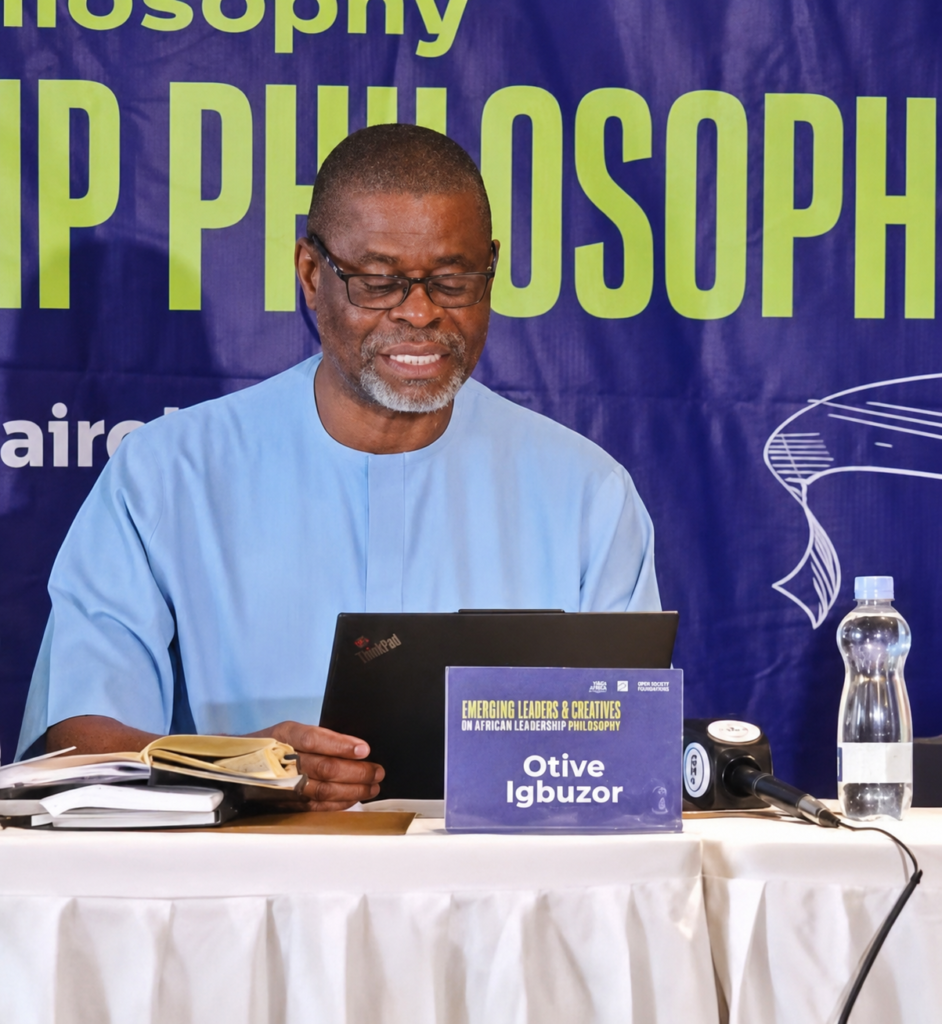
Speaking at the Convening of Emerging Leaders and Creatives on African Leadership Philosophy in Nairobi, Kenya, on Thursday, Igbuzor said Africa’s future depends on building leaders who are not only competent but also ethical, culturally grounded and committed to the common good.
The two-day gathering, organised by African Centre for Leadership, Strategy & Development in partnership with Yiaga Africa and the Open Society Foundations, brought together young leaders, creatives, innovators, storytellers and digital influencers from across the continent.
According to Igbuzor, Africa is facing a paradox in which economic growth and transformation coexist with rising youth unemployment, inequality, exclusion and growing frustration with leadership systems perceived as disconnected from citizens’ aspirations.
He noted that the convening forms part of the Africa Leadership Development Project (ALDP), an initiative aimed at strengthening democratic governance through leadership development rooted in African values, cultures and ethical traditions.
“Our leadership challenges are partly linked to leadership models that have drifted away from indigenous standards of accountability, communal responsibility and ethical stewardship,” he said.
Igbuzor stressed that discussions on African leadership philosophy must move beyond academic debates and focus on practical application in governance, entrepreneurship, digital innovation and community development.
Highlighting Africa’s rich leadership heritage, he referenced philosophies such as Ubuntu of Southern Africa, Omoluabi of the Yoruba people, Sankofa of Ghana, Ujamaa of Tanzania, Harambee of Kenya, Oha na Eze among the Igbo and Mutumin Kirki in Northern Nigeria.
He explained that despite their cultural differences, these philosophies share common principles centred on integrity, justice, service, consensus-building, human dignity and collective responsibility.
“Leadership is not primarily about titles or positions. Leadership is about service, character, integrity, responsibility, community, justice and human dignity,” he said.
The development expert argued that indigenous African philosophies offer practical solutions to contemporary governance and development challenges, while providing a moral alternative to leadership models driven solely by individual ambition and power.He urged participants to explore how music, film, literature, social media, entrepreneurship and civic activism can be leveraged to promote values-based leadership among young Africans.
Describing participants as future custodians of Africa’s leadership narrative, Igbuzor said the continent’s future would be shaped not only in classrooms and policy institutions but also through creative industries, digital platforms and grassroots community action.
He challenged attendees to engage boldly and creatively throughout the deliberations, with a view to developing narratives, platforms and tools capable of inspiring a new generation of ethical, inclusive and transformative leaders across Africa.
The convening is expected to generate recommendations on how African leadership values can be effectively transmitted to younger generations and integrated into contemporary governance and democratic processes across the continent.