
By Chief Austin Emaduku, PhD
INTRODUCTION
It is 32 years ago this year that the very first King of Udu, HRM Barr. Emmanuel Bethel Otete Delekpe, ascended the throne as Owhorhu I, effectively setting the pace for the rotational kingship which the Udu people chose for themselves. HRM E.B.O. went on to rule for 31 prosperous years before joining Oliha and others gone before in the pantheon of Udu ancestors, where he surely sits at the table as a most distinguished ancestor. The King lives!
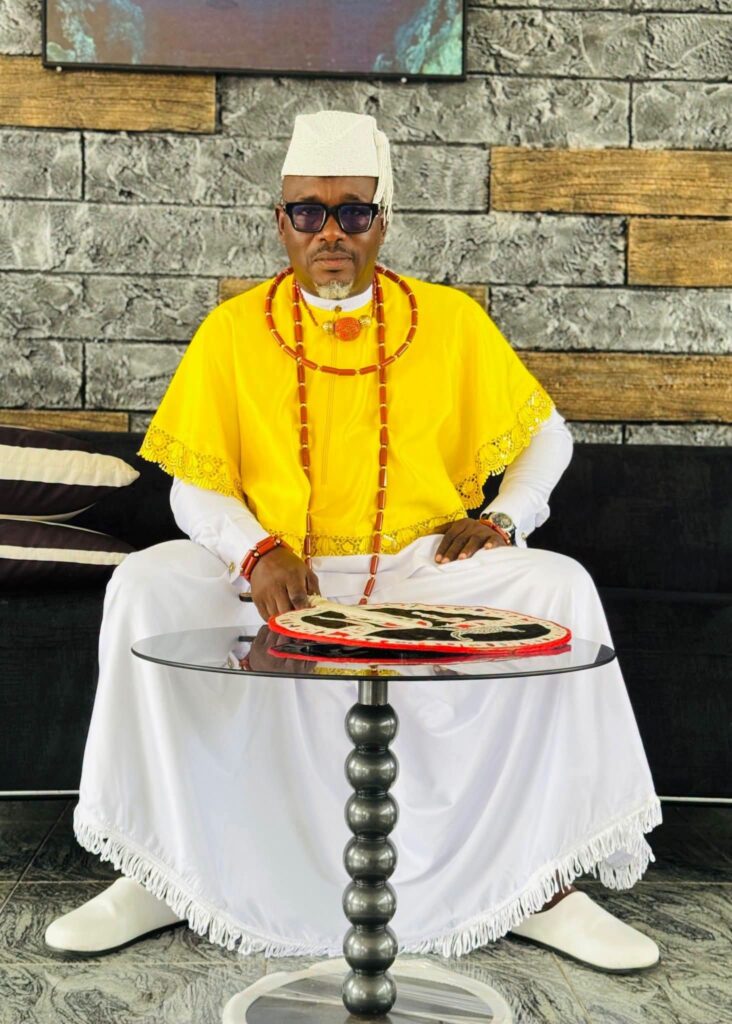
It is on the throne first occupied by the pathfinder King that our present King, HRM Engr. Michael Ogheneovo Orugbo, JP, KP, now sits as Okporua I, marking the very first transition from one king to another in the history of Udu Kingdom. Long may you reign, Your Majesty.
Just as it was during the selection of the first King, the process that led to the selection and enthronement of the present King was not without challenges. To put things in perspective, the challenges encountered in the selection process of the second king are a child’s play when compared to what transpired before the first king was crowned. There were claims, counterclaims, and court cases which lasted for over two decades. The Udu people must, therefore, congratulate themselves for seeing the process through without much fuss and for the lucky choice of a king who is loved by all and who has shown capacity since his enthronement. This alone is enough reason why we must all adopt the attitude of “no victor, no vanquished.”
PROCESSING OF GOVERNMENT RECOGNITION FOR THE FIRST OVIE OF UDU KINGDOM, HRM OWHORHU I
Thirty-two years is a fairly long time in the history of a nascent kingdom. Many young people today, who have themselves become parents, were not born then, and even those born then, who are now in their early to late forties, were either toddlers or too young to understand and were oblivious to the history that unfolded before them. Most of the active participants at the time—especially the kingmakers—have all gone to be with their Maker. It has therefore become imperative, in light of contemporary events and as memory wanes, for those who were participants or witnesses to events at the time to put their experiences on paper for the present and future to learn from, in our efforts and march towards kingdom-building.
The foregoing are my recollections and rendition of the events as a witness/participant in the run-up to the installation of the first King of the Udu Kingdom, HRM Barr. E.B.O. Delekpe, Owhorhu I. Part is an account of my direct involvement and part is an account of what I saw and read in the records as well as what I learned from others during the immediacy of that time.
I resumed duties as an administrative staff member at the old Okpe Local Government Council Secretariat on 23rd March 1993. Okpe Local Government then comprised the present Okpe, Udu, and Uvwie Local Government Areas. My employment was secured for me by my elder cousin, the late Sam Eguono Okoro, who represented Okpe South in the Delta State House of Assembly under the Ibru administration. Fresh from the National Youth Service, I had a brief stint as a print journalist in _Delta Newsreel_ and _Vivid People_, two of the many tabloids that sprouted back then in the city at the creation of Delta State. My background as a student union activist and campus journalist equipped me for the administrative job to which I was employed, and this showed very early in my working career, judging by the sensitive nature of the assignments I was given as a non-confirmed member of staff. I introduced my style of writing, which was fresh and earnest, into the writing of official memos. This greatly endeared me to my superiors, whereby I was always given assignments that required the writing of reports.
The High Court of Justice, Warri Division, had on the 12th day of June 1992 given its verdict in the protracted case between the various contestants to the stool of Ovie of Udu. The judgment was neither in favour of the two surviving contestants, namely Mr. Oto Aya and Mr. Samuel Dogene Erhierhi. The Court referred the matter back to the Udu Council of Chiefs to start a fresh selection process. It was into this mix that I, a socially conscious young man was thrown a year later when I resumed duties at the Okpe Local Government Council.
At that time, a few of us who were Udu indigenes used to feel somewhat inferior during national ceremonies such as National Day, Children’s Day, Armed Forces Remembrance Day celebrations or any other official ceremonies where Traditional Rulers were invited and Udu was the only kingdom represented by an Otota. How we yearned to have a king! As a matter of fact, the Okpe indigenous members of staff used to poke fun at us for having no king. They even went as far as taunting us that our Regent was a white man, in reference to the skin colour of our then Otota, Chief E. G. Sido. So when the assignment to investigate the issues surrounding the Ovieship of Udu landed on my lap, I saw it as an opportunity to contribute my quota to the early making of a King for Udu.
During the first quarter of 1994, following a flurry of letters from the Udu people on the selection of the Ovie, I was assigned as Secretary of a two-man investigative team headed by Mr. Basil Oguafor, then a Personnel Officer I, SGL 09, who later became Head of Personnel Management of Udu Local Government, to investigate the issues and turn in our report. We visited Udu and interviewed key participants at the time. We sourced and scoured many documents upon which we based our report. That investigative visit gave me a clear insight into the tussle for the Ovieship of Udu and prepared and equipped me for the role I was to play months later at a critical point in the process leading to government recognition of HRM Barr. E.B.O. Delekpe, the first king of Udu.
I learnt from official records gleaned from the documents obtained in the course of the investigation that Dr. Samuel Dogene Erhierhi was once referred to as Ovie-Elect of Udu in some official documents as far back as June 1983. He, however, couldn’t secure government approval due to the court cases that eventually truncated his claim to the throne. Specifically, a report of the Ughelli Traditional Council, Ughelli Local Government Area, on the appointment of Ovie of Udu, dated the 24th day of June 1983, had this to say: “Having regard to the guidelines laid down in the approved and the registered declaration for the appointment of Ovie of Udu, which is published as B.S.L.N. 97 of 1979, and in consideration of all the evidence before it in the matter, the Ughelli Council of Chiefs is satisfied that the Owhorhu Ruling House has complied with the provisions of the above-quoted law in presenting their candidate, Dr. Samuel Dogene Erhierhi, as Ovie-Elect of Udu. In light of the foregoing and in consideration of the fact that Udu has overstayed without a Traditional Ruler, a situation which does not make for the proper government of a people, the Ughelli Traditional Council accordingly recommends that Government accord, without further delay, the recognition of the appointment of Dr. Samuel Dogene Erhierhi as Ovie-Elect of Udu.”
This report was signed by the following:
HRH D.G. Ohwovoriole, Ohworode of Olomu – President
HRH Jonny Onowenerhi, Ovie of Ewu
HRH S.E. Oghoghovwe II, Ovie of Ughelli
HRH Johnson Dase, Okobaro of Ughievwen
HRH Onojeta Okukeren, Ovie of Arhavwarien
HRH Enevwedia Chanomi, Ovie of Effurun-Otor
Chief A.E. Okpalefe, representing HRH Okpalefe II, the Osuivie of Agbarho.
We compiled all the documents and attached them to the report. We made our recommendations, taking into cognizance the June 1992 Court ruling on the matter. We submitted the report to the council, which in turn forwarded a copy to the Directorate of Local Government and Chieftaincy Affairs, Asaba.
Following fresh rounds of letters from the Udu Council of Chiefs headed by Chief E.G. Sido as Otota and Chief Michael Oghenekaro as Secretary on the one hand, and Olorogun Omuvwie Piokor, Odede Ade, Olorogun John Batete, Otota Ade, Chiefs Shitu Agi and Ogandje Kosie Odede and Otota of Igbun, respectively, and Chiefs G.S. Veyan and Michael Kwabecha, Odede and Otota of Eboh Udu, respectively, as well as the Oniemo of Udu Chief, Madam P. Ohwowowighievu for the Ade-Udu Traditional Council on the other hand, the state government referred the matter to the Okpe Local Government Traditional Council for consideration and feedback.
The Udu Council of Chiefs presented Barr. E.B.O. Delekpe as its selected and crowned candidate. The Ade-Udu Traditional Council, on the other hand, presented Dr. Samuel Dogene Erhierhi as its selected and crowned choice in their separate letters to the state government.
The Okpe Local Government Traditional Council met on 28th June 1994 to consider the issue. In attendance were:
HRH Orhoro I, JP, The Orodje of Okpe – Chairman
HRH Eruowho II, The Ovie of Uvwie
His Highness Chief E.G. Sido, Regent and Otota of Udu
Chief J.O. Biokoro, The Otota of Okpe Kingdom
Chief L.O.M. Agbofodoh, The Otota of Uvwie and
Barr. F.O. Ekpekurede, Chairman, Okpe Local Government.
I was the de facto recorder as the main recorder, Mr. O. Iyasele, Personnel Officer I, left me to take minutes of the meeting because he did not understand the Urhobo language and, secondly, because of my knowledge of the issues to be discussed. He believed I could guide the meeting to take the right decision based on the in-depth report we had earlier submitted. The meeting started on a shaky note. We had no time to prepare a brief for the meeting because of the hurried manner in which it was called.
The two Royal Fathers in attendance, who seemed to have come with predetermined positions, stuck to their positions. I could feel the handiwork and influence of the Udu leadership under the late Chief W.T. Odibo in the speed with which the matter was referred to the council. While the Orodje of Okpe wanted the matter to be dealt with and concluded, the Ovie of Uvwie wanted more time for investigation. This was also the position of the Council Chairman, Barr. Ekpekurede. At a point in the meeting, the Orodje a no nonsense king, experienced in these matters shouted at the Chairman and warned him against the spiritual implications of delaying resolution of kingship matters. He specifically told him that the smooth red rug in his office can develop unseen gullies that could break legs.
In the midst of all these, the Otota of Udu was silent. I expected him to stand up and defend his position, especially as a lawyer. He was inexplicably silent. The meeting was about to adjourn on a stalemate. The Ovie of Uvwie was about to move the motion when I summoned the courage to put up my hand. By the rules, as a recorder, I was to be seen, not heard, but the dread of allowing the moment that could fast-track the appointment of an Ovie for Udu to be derailed seized me. I recalled all the taunts by our Okpe colleagues and blurted out. “Your Royal Highnesses,” I said, my voice trembling but determined. “sorry, we couldn’t process a proper brief before this meeting, but there are documentary facts in the file I am holding that can help their Royal Highnesses decide on this issue without further delay.” They were taken aback by the audacity of the young man, but the Orodje thankfully gave me the go-ahead to make my presentation. I pulled out the 1979 Edict, which is the Declaration of Customary Law Regulating Succession to the Ovie of Udu. I quoted from the section that empowers the Udu Council of Chiefs as the only body to present an Ovie-Elect to the Traditional Council. I pulled out the letter from the Udu Council of Chiefs presenting Barr. Delekpe. I brought out the other letter presenting Dr. Erhierhi under the Ade-Udu Traditional Council. I told them that this body is not known to the law and therefore its request is not supposed to be considered in this meeting, and that, besides, the gazetted and government-recognised Regent and Chairman of the Udu Council of Chiefs is the right and proper person to present an Ovie-Elect of Udu to the body. The Orodje exclaimed in the Okpe language, “Ohine!” which means “it is finished.” There and then the presentation was approved, and I was mandated to write a report to be signed by all the attendees to be sent to the state government, which was done and which led to the approval and government recognition through the presentation of the Staff of Office to the first Ovie of Udu, HRM Barr. Emmanuel Bethel Otete Delekpe, as Owhorhu I.
The Udu kingship experience in Okpe Local Government helped me cut my teeth in handling kingship and chieftaincy matters and gave me insight into the way government processes issues of kingship. This experience was to guide me in processing other Kings for government approval in several other kingdoms, especially that of the present King of Oghara, HRM Noble Eshemitan, while I was acting Chairman of Ethiope West Local Government Council. I worked with the late Kings of Idjerhe and Mosogar under the guidance of the then Deputy Governor, Prof. Amos Utuama, in achieving that task.
PROCESSING OF UDU’S FIRST SET OF CHIEFTAINCY CERTIFICATES
Fast forward to 2001. I was posted from Ethiope East to Udu Local Government Council. In the course of the years, I was deployed as the recorder to the Udu Traditional Council, as it was then called. In that capacity, I was instrumental in processing the first set of government-issued Chieftaincy certificates in Udu history. I doubt if another set has been processed since then. I was able to perform that task from experience gained from working with HRM Orhoro I, the late Orodje of Okpe, who was very experienced in government procedure relating to chieftaincy matters. He had documents from way back, even to the colonial days. It was from him that I got the proforma for processing Chieftaincy certificates while I worked in Okpe.
The entry point for the original kingmakers in Udu was 1980. They effectively became the first set of government-recognised chiefs in Udu by operation of the law establishing the kingdom. The likes of Chiefs Edward Sido, W.T. Odibo, T.K. Dugbo, G.N.O. Sefia, and T.O. Esiena belonged to this category. As the original members passed on, they were replaced by other appointed Chiefs from their ruling houses. People like Chiefs Jefan Mukoro and Isaac Lafua, according to records obtained from T.O. Esiena, joined the kingmakers in 1993, while the next set, including Chiefs Alfred Omih, Mark Orukpe, Philip Eruena, Isaac Evwrirhe, and Emmanuel Odjo, joined as kingmakers in 1994.
The first conferment of Chieftaincy titles by an Udu King took place on the 27th of April, 1996. Those conferred with titles on that occasion included Chiefs John J. Siunupron, David Poge Otiripken, Upriver Biuwovwi, B.J. Egbetamah, Alfred Badidi, Julius Ojor, Anthony Daghragba, and Isaac Otima. The entry of this 1996 set of Chiefs was not without some drama. Some of them were admitted into the Udu Traditional Council, where they started questioning the Chieftaincy status of the kingmakers. According to them, they were the real Chiefs in Udu and actually advocated that the kingmakers formalise their Chieftaincy status by having the king confer titles on them. They were questioning the very foundation that gave birth to their own Chieftaincy titles and, by extension, the legitimacy of the king. It was this argument that led to the old kingmakers’ request for the processing of their Chieftaincy certificates. In the proforma for processing the certificates, there is a section for “Approving Authority” under which the applicant is required to fill in the name of the king who conferred or approved his or her title. In thinking of the new Chiefs, the kingmakers will not issued certificates because of this provision. While completing the form for the old kingmakers, I simply filled in that column “By operation of law.” The Chieftaincy certificates were issued and that put paid to the agitation.
CONCLUSION
Above are some of my contributions as a participant in history towards kingdom-building through the process that led to the recognition of our first king, not to mention the role I played in midwifing the emergence of the current king. My trajectory in Udu history has reaffirmed to me that when God chooses to send a man on errand, He looks neither to the size of his body or pockets but to his heart. It would appear that God has placed me in position to act in critical times in kindom building. I give Him all the glory.
The late King knew of these roles. He was told of the role I played on that fateful day during the Okpe Local Government Traditional Council meeting. That was why, when I went to inform him, in the company of Chief Alfred Origbo, of my intention to run for the office of President General of Udu, he said to me, and I quote: “Maduku, it is people like you I want. You are smart and intelligent. You were with us from the beginning. I don’t know why you stayed away.” He concluded by adding, “but you are still in service,” to which I replied, “The service rules do not forbid me from engaging in community leadership, Your Majesty.” He prayed for me and asked that I make photocopies of my application form available to him after I had filled in and submitted it to the electoral committee. When I visited him again to submit photocopies of the forms, as requested, in the company of my then Community President, the late Mr. Midwest Wetah, he said to me that he was under pressure to handpick a candidate but he was not going to, and prayed for me again. The rest is now history.
Another incident that I will not forget, which showed the late King’s soft spot for me, was when I learnt that he had written a book on Udu history. I was doing research then for an article on Udu history. I went to him to request a copy of the book, which he had held back from releasing to the public due to some controversial content in it. HRM did not hesitate in releasing the book to me with the comment that I was one of the few persons to get a copy.
I am happy that, despite all, our late King played the role of a true father when I prostrated before him for forgiveness at the point of my being confirmed a chief, and he did by confirming me as Chief/Kingmaker of Udu Kingdom.
May the soul of Owhorhu I continue to live on.